
Contents
Overview
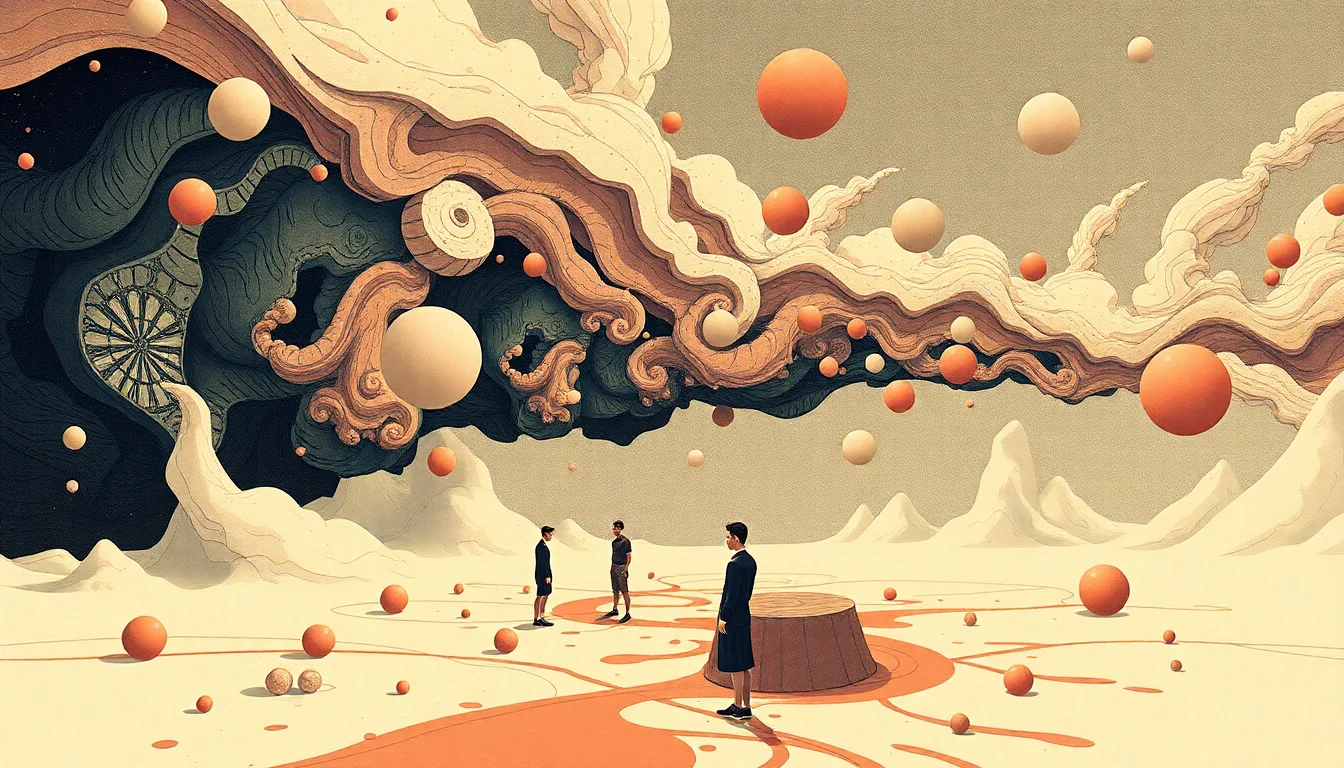
The marriage of surrealism and distortion is deeply rooted in the early 20th-century avant-garde. Influenced by Freudian psychoanalysis and the Dadaist rejection of logic, Surrealists sought to liberate the imagination by exploring dreams, automatism, and the irrational. Distortion became a primary vehicle for this exploration, allowing artists to depict the illogical juxtapositions and transformations characteristic of the dream state. Precursors like Hieronymus Bosch and Francisco Goya had already employed unsettling imagery and warped forms, but the Surrealists systematized distortion as a means to access the subconscious. Early Surrealists championed techniques like frottage and grattage, which inherently introduced elements of chance and visual disruption, paving the way for more deliberate distortions in painting, sculpture, and photography.
⚙️ How It Works
Distortion in surrealist art operates through various visual strategies to subvert conventional representation. Artists might employ anamorphosis to create images that appear warped from one angle but resolve from another, mirroring the elusive nature of memory or perception. Data bending and glitch art techniques echo Surrealist desires for accidental beauty and the disruption of digital media, akin to how early Surrealists experimented with photomontage and surrealist film. Algorithmic distortion can generate complex, unpredictable patterns that resonate with the automatic drawing methods favored by artists like Max Ernst. The goal is often to create a sense of unease, wonder, or psychological intensity by altering scale, perspective, form, or texture, making the familiar appear alien and the impossible seem tangible.
📊 Key Facts & Numbers
While precise quantification of 'surrealist distortion' is challenging, its impact is evident in the sheer volume of artworks produced. The Surrealist movement spanned approximately two decades of intense activity. There is a continuous lineage of surrealist distortion spanning over 90 years.
👥 Key People & Organizations
Key figures instrumental in shaping surrealism and distortion include Salvador Dalí, whose melting clocks became an iconic symbol of distorted time. René Magritte used uncanny juxtapositions and scale shifts, while Joan Miró developed biomorphic forms that seemed to morph and transform. Frida Kahlo incorporated personal trauma and physical distortion into her self-portraits, infusing Surrealist aesthetics with raw emotional honesty. Beyond painting, Man Ray explored distortion through experimental photography and surrealist film. Contemporary artists like Eric White continue this legacy, employing hyperrealism to depict unsettling, distorted scenarios that echo the psychological depth of early Surrealism.
🌍 Cultural Impact & Influence
The influence of surrealism and distortion extends far beyond the art world, permeating popular culture, fashion, and advertising. The visual language of distorted realities has been adopted in film by directors like David Lynch and Terry Gilliam, who use warped perspectives and dreamlike narratives to create immersive, often disturbing, cinematic experiences. Fashion designers frequently draw on Surrealist motifs, incorporating unexpected forms and deconstructed silhouettes. In advertising, distorted imagery is used to capture attention and convey abstract concepts or emotions, making the mundane extraordinary. The widespread adoption of these techniques demonstrates their enduring power to provoke thought and evoke strong emotional responses across diverse audiences.
⚡ Current State & Latest Developments
The legacy of surrealism and distortion continues to thrive, particularly within digital art communities and contemporary painting. Glitch art and AI art generators, such as Midjourney and Stable Diffusion, are now capable of producing highly complex and often bizarre distorted imagery, sometimes unintentionally mirroring Surrealist automatism. Artists are exploring new mediums, including virtual reality and augmented reality, to create immersive distorted environments. The resurgence of interest in data bending as a technique for manipulating digital files into unexpected visual forms also highlights the ongoing relevance of distortion as an artistic strategy. Galleries and online platforms continue to feature artists who push the boundaries of visual perception through these methods.
🤔 Controversies & Debates
One of the primary controversies surrounding surrealism and distortion lies in its potential for misinterpretation or superficial adoption. Critics argue that when distortion is used purely for shock value without deeper psychological or conceptual grounding, it can devolve into mere gimmickry. There's also debate about whether digital tools that automate distortion, like AI art generators, truly capture the intentionality and subconscious exploration that defined early Surrealism, or if they represent a new, albeit different, form of artistic expression. The accessibility of these tools raises questions about authorship and originality, as AI-generated distorted images can be produced rapidly and in vast quantities, potentially diluting the impact of individual artistic vision.
🔮 Future Outlook & Predictions
The future of surrealism and distortion appears increasingly intertwined with technological advancements. As virtual reality and augmented reality technologies mature, artists will have new canvases for creating deeply immersive and interactive distorted experiences that can directly manipulate a viewer's sense of space and reality. The ongoing evolution of artificial intelligence in art generation suggests that AI will become an even more sophisticated tool for creating novel forms of distortion, potentially leading to entirely new aesthetic movements. There's also a growing interest in exploring the physiological and psychological effects of distorted visual stimuli, which could lead to applications in therapy or immersive entertainment, further expanding the reach of this artistic approach.
💡 Practical Applications
Distortion, as employed in surrealist art, finds practical applications across several fields beyond fine art. In graphic design and advertising, distorted typography and imagery are used to create eye-catching visuals that convey dynamism, unease, or a break from the norm. UI/UX design can employ subtle distortions to guide user attention or create unique brand identities. In film, distorted visual effects are crucial for depicting psychological states, dream sequences, or otherworldly environments, enhancing narrative depth. Video game design also heavily relies on distorted aesthetics to build immersive worlds and create memorable characters. Even in fields like architecture, the principles of distorted forms can be seen in avant-garde designs that challenge conventional spatial expectations.
Key Facts
- Category
- aesthetics
- Type
- topic